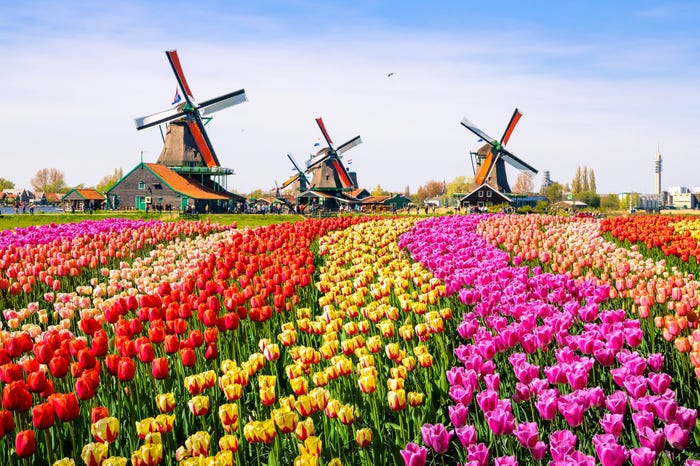
Netherlands is an European country that sits on the northwest of the continent. It is a country filled with stories of triumphs over hurdles, and curveballs that nature threw at this small nation. The nation is an inspiring story of how it has turned it’s weaknesses into strengths, trailblazing on the path of development. Besides being a popular tourist destination, the country also known as Holland, plays a significant role in world trade.
- Low Lying Areas
Netherlands, literally translates to “low lying countries”, a name given to it for it’s flat, low lying lands. The topography of Netherlands makes it severely prone to inundation and flooding, where in large chunks of land would submerge underwater. Since the lands fall below sea level, the risk of flooding has always been severe.

The Dutch tackled this problem, with the help of the swift winds that blow in the area. Long back, ancient Dutch used windmills to drain water from the low lying grounds back to the sea. Hence, the windmills hold an iconic significance not just in the landscapes of Netherlands, but also in the hearts of its people.
- Size
Netherlands is a small country, with a total area of 41,526 sq. km, out of which inland water accounts for about 7,643 sq km. The country stretches roughly 300 kms from North to South, and 260 kms approx. from East to West. Which implies that one could cover the entire length and width of the country in a day.
Despite it’s size, the Dutch have smartly and skillfully utilized the resources available to them, to make the best possible use of them. The architects and engineers of Netherlands have pioneered with developing skillful, smart design marvels that have made it one of the most densely populated countries.
By reclaiming land from the sea, and keeping the sea at bay with the help of dikes, Netherlands have reclaimed roughly 6,500 sq km of land.
- Winds
Given the position of the country, the Netherlands stands in an area of high pressure winds. The countryside of Kinderdjk has no mountains or fields, to block the strong, coastal winds. The inventive Netherlands tactfully, taking a leaf from their history, deployed tall and large turbines. The wind turbines are used to transform the energy of the winds to harness power. Some of the huge ones can generate enough energy to power 2000 homes.
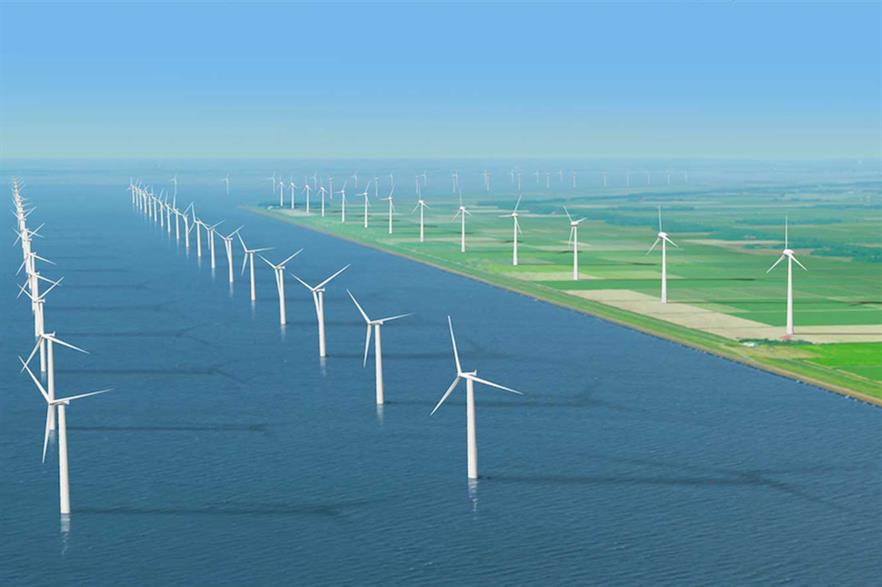
And so, the windmills and turbines, both old and new, are iconic, integral structure of Netherland landscape.
- Largest Seaport
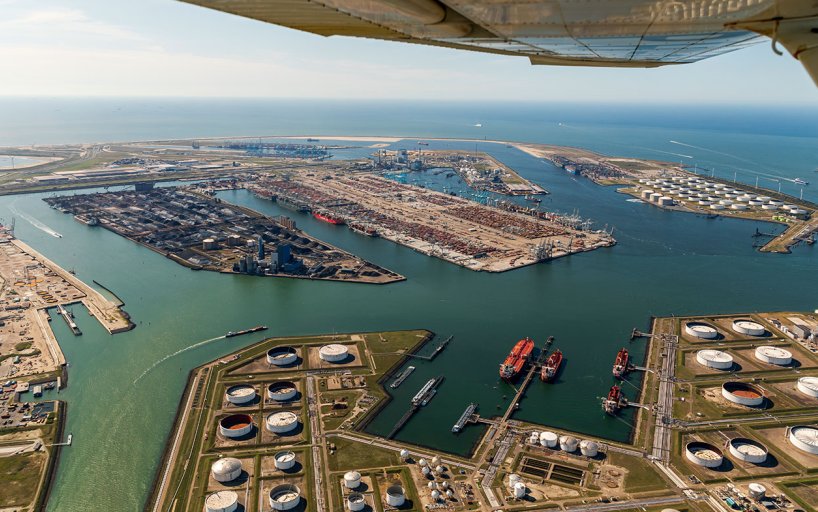
Thinking resourcefully, Netherlands tactfully utilizes the major coastline at it’s disposal, as seaports that have essentially intricately connected the country to the rest of the world. This small country alone has 5 of the most important European seaports; The Port of Rotterdam,the Port of Amsterdam, Port of Moerdijk, Zeeland seaports and Groningen Seaports.
The country enjoys the unique location of close proximity to several landlocked European nations. Hence, the unique chance to act as a gateway for the landlocked nations to the world through it’s shores.
The country’s second largest city Rotterdam is Europe’s biggest sea port. It is an enormous seaport that has about 42 kms of waterways, providing maximum opportunities for easy access to several large volume ships.
- Floating Homes

The architecture in Netherlands, especially in Amsterdam, attracts many for it’s efficient use of space for such a densely small nation. It is the 5th most densely populate country in Europe with a density of 424 per square kilometer. The inventive architectures and engineers of the country are constantly thinking of new ideas and ways to tackle this problem of housing the population with ease.
In recent times, the idea of floating homes are the latest experiment of the professionals. Taking the utility of the vast waterways further, the architects, working alongside engineers have crafted homes that need no land. Floating homes is an exciting idea for a country like Netherlands.
These floating home aquatic colonies are being designed to be equipped with all amenities and facilities of a regular house, except this floats and can be transported.
 Move Around World