

Our world is home to innumerable places that are stunningly beautiful and breathtaking. Many of these are natural structures of waterfalls, beaches, forests and then there are man made structures, that makes one step back in awe. Often when talking about certain iconic landmark structures such as the Taj Mahal or the Colosseum, an important attribute mentioned by default is their revered title of being one among the 7 wonders of the world.
But, what does it really mean to be among the 7 wonders of the world? And, which landmarks are part of this list?
The original 7 wonders of the world was a list that was compiled in the 2nd Century by the Greek and comprised of Great Pyramid of Giza, Hanging Gardens of Babylon, Temple of Artemis, Statue of Zeus at Olympia, Mausoleum at Halicarnassus, Colossus of Rhodes, and the Lighthouse of Alexandria of which only the Great Pyramid of Giza is still in existence.
In 2000, Bernard Weber began a world wide poll to revive and update the 7 wonders of list including the structures and wonders that existed in the current times. The world wide polling among 200 monuments was conducted through the web and on telephone. In 2006, a panel narrowed down the 7 selections, which are :
Great Wall of China

The great wall of China which stretches 21,196.18km (13,170.6956 miles) long was built for the purpose of fortification at the historical north border of the country. The earliest trace of building the wall can be traced to as early as 7th Century BC, and later additions were made through successive dynasties. The great wall structure is a mind boggling structure, that stands out for the long distance that it stretches.
Petra
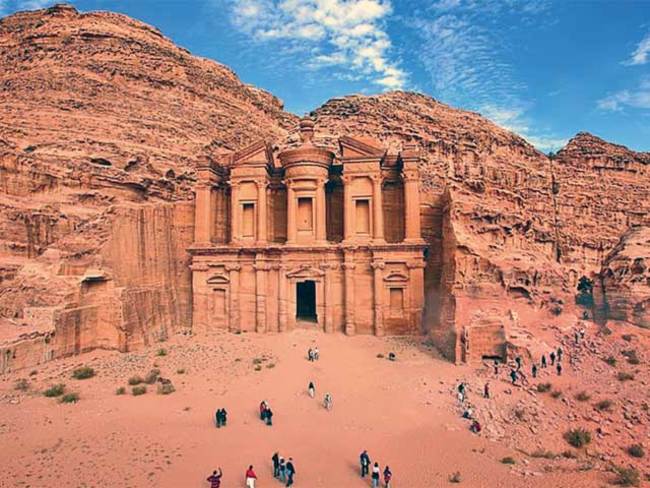
Petra is a historical city in an ancient valley in south Jordan, that is touted as an architectural marvel. The city that might have been inhabited as early as 4th Century BC as a capital city for the Nabataeans. The city standouts for it’s mesmerizing rock cut architecture, where the carving on structure changes color with the sun. The city is also famed for it’s ahead of time water system used for irrigation.
Colosseum

Colosseum is a stunning, huge ancient amphitheater that sits in the bustling city of Rome, Italy. Built in the 80 AD, the Colosseum is the largest amphitheater that was ever built and also is standing. The oval amphitheater could hold 60,000 – 80,000 spectators for various events and shows through out history. A substantial part of the structure was ruined owing to earthquakes and robbery, yet the magnificent structure still stands strong and attracts several visitors even today.
Chichén Itzá
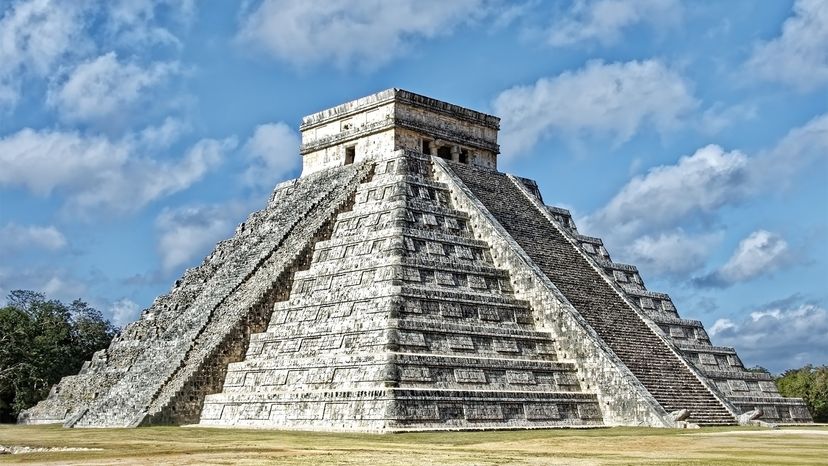
Chichén Itzá is a large, historic Mayan city that was built in the pre Colombian times, and was a prominent city in the 9th – 10th Century CE. The city stands out for several important monuments and temples. The stepped pyramid El Castillo (“The Castle”) is the most iconic structure among them, and is also an ancient scientific marvel. The structure has a total of 365 steps, the number of days in the solar year.
Machu Picchu
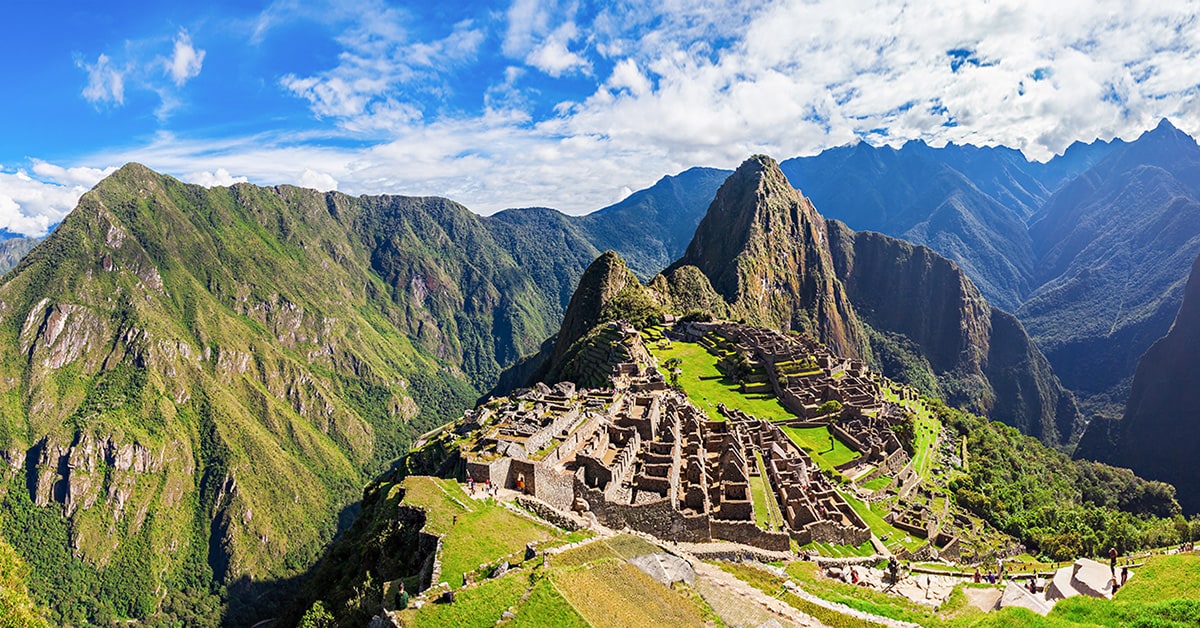
The Machu Pichu is an iconic structure in Southern Peru, located on the mountain ridges has confounded historians and archeologist. The ancient fortified town is relatively intact and is part of the Inca empire. The well guarded 15th Century structure wasn’t discovered by foreigners until the 19th Century.
Taj Mahal

The Taj Mahal is a magnificent mausoleum in Agra, India. It was constructed on the orders of the Mughal emperor Shah Jahan given in 1632. Shah Jahan had the iconic ivory complex built to honor the tomb of his wife, Mumtaz. The grand structure took 22 years and 22,000 workers to construct with an overlooking garden and reflecting pool.
Christ the Redeemer

Christ the Redeemer is a statue of Jesus, that stands on the Corcovado mountain in Brazil. Built between 1921 and 1931, the statue is 30 metres (98 ft) high, that stands on a 8-metre (26 ft) pedestal. The arms stretch 28 metres (92 ft) wide. The iconic large structure is made of concrete and soapstone, and attracts several visitors every year.
Giza Pyramids (Honorary title)

The Giza Pyramids are the only structures from the original list of seven wonders of the world that is still standing, and hence hold an honorary title even in the new list. The Giza complex in Egypt is home to several pyramids including the Great Pyramid of Giza. Most of these were built in 2600 and 2500 BC. The iconic structures have been a site of interest for archaelogists and historians.
 Move Around World